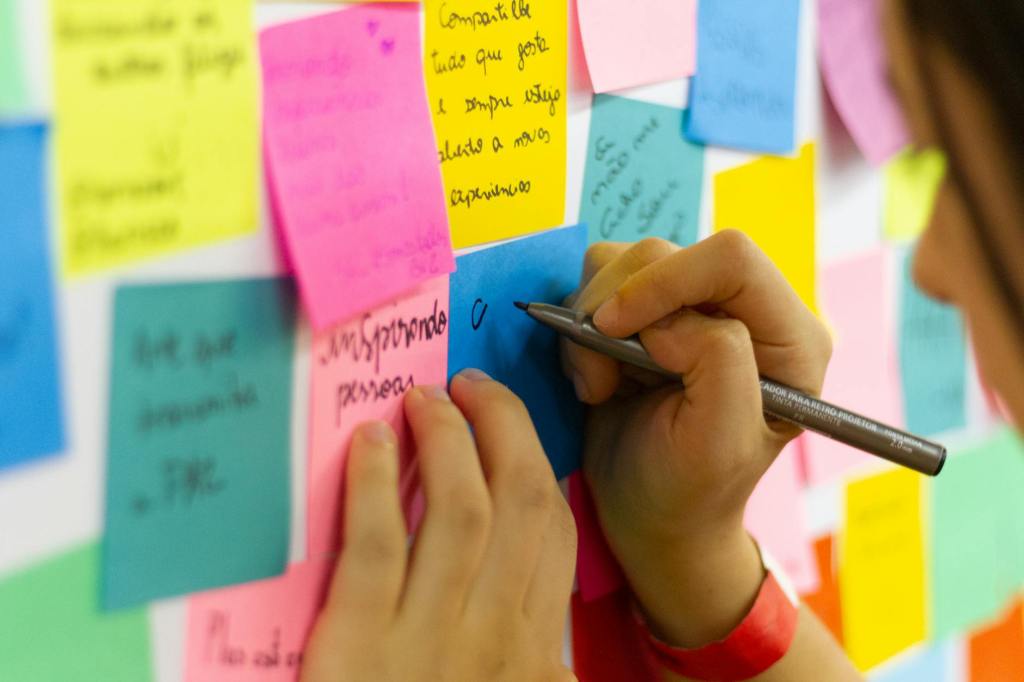
In today’s fast-paced and competitive world, businesses and individuals need innovative solutions to complex challenges. Design Thinking, a human-centered problem-solving approach, has emerged as a powerful framework to foster creativity, empathy, and efficiency in tackling real-world issues.
What is Design Thinking?
Design Thinking is an iterative process that involves understanding user needs, redefining problems, and developing innovative solutions. It is widely used by designers, entrepreneurs, and businesses to create products and services that resonate with their target audience. The methodology encourages a mindset of experimentation, collaboration, and continuous improvement.
The Five Stages of Design Thinking
- Empathize – Understanding users’ needs, pain points, and emotions through research, observation, and engagement. This step helps designers put themselves in the users’ shoes to gain deep insights into their experiences.
- Define – Synthesizing the information gathered to define a clear problem statement. This stage focuses on narrowing down the challenge and framing it in a way that guides solution development.
- Ideate – Generating a broad range of ideas without constraints. Brainstorming, mind mapping, and other creative techniques are used to explore multiple possibilities and encourage out-of-the-box thinking.
- Prototype – Creating tangible representations of ideas through sketches, mockups, or interactive models. Prototyping allows teams to visualize solutions and refine them based on feedback before full-scale implementation.
- Test – Evaluating the prototypes with users to gather feedback, identify gaps, and iterate on the design. Testing ensures that the solution effectively addresses the problem and enhances user satisfaction.
Why is Design Thinking Important?
- Human-Centered Approach: It prioritizes user needs, leading to more effective and user-friendly solutions.
- Encourages Innovation: By fostering creativity and experimentation, it enables teams to explore unconventional solutions.
- Reduces Risk: Early prototyping and testing help mitigate risks by identifying issues before full-scale deployment.
- Improves Collaboration: It brings together diverse perspectives from cross-functional teams, leading to more comprehensive problem-solving.
- Applicable Across Industries: While traditionally used in product design, Design Thinking is now applied in business strategy, healthcare, education, and even policy-making.
Real-World Applications of Design Thinking
- Apple: Focused on intuitive and user-friendly product design, resulting in revolutionary devices like the iPhone and MacBook.
- Airbnb: Used Design Thinking to revamp its customer experience, leading to exponential growth and user engagement.
- Healthcare: Hospitals and healthcare providers use Design Thinking to improve patient experiences and streamline care processes.
Conclusion
Design Thinking is more than just a methodology—it’s a mindset that drives innovation and problem-solving in a structured yet flexible way. By focusing on empathy, collaboration, and iteration, businesses and individuals can develop solutions that truly resonate with users and create meaningful impact. Whether you’re designing a new product, optimizing a process, or tackling a societal issue, embracing Design Thinking can unlock powerful opportunities for success.
 Garima Rathor
Leave a comment